Deeper. Broader. Cleared for more.
Not all TMS systems are the same. The most important difference is the coil. IPMG TMS uses BrainsWay's H-coil — built into a soft, cushioned helmet — at every one of our 33 Southern California locations, with both the H1 system (depression spectrum) and the H7 system (OCD) on site.
Two architectures, two outcomes.
Standard TMS — the kind most local clinics use — relies on a coil shaped like the number 8 (a figure-8 coil). It produces a focal magnetic field that reaches roughly 1.5 cm into the brain and stimulates a small volume of cortical tissue (around 3 cm³). It works, but small variations in head shape or scalp-to-cortex distance can cause it to miss the intended target.
BrainsWay Deep TMS uses a different coil — the H-coil — designed in collaboration with the U.S. National Institutes of Health and used only by BrainsWay. The H-coil reaches roughly 2–3 cm into the brain and stimulates about 17 cm³ of cortical tissue. That is roughly 5–6× the volume of the figure-8 coil.
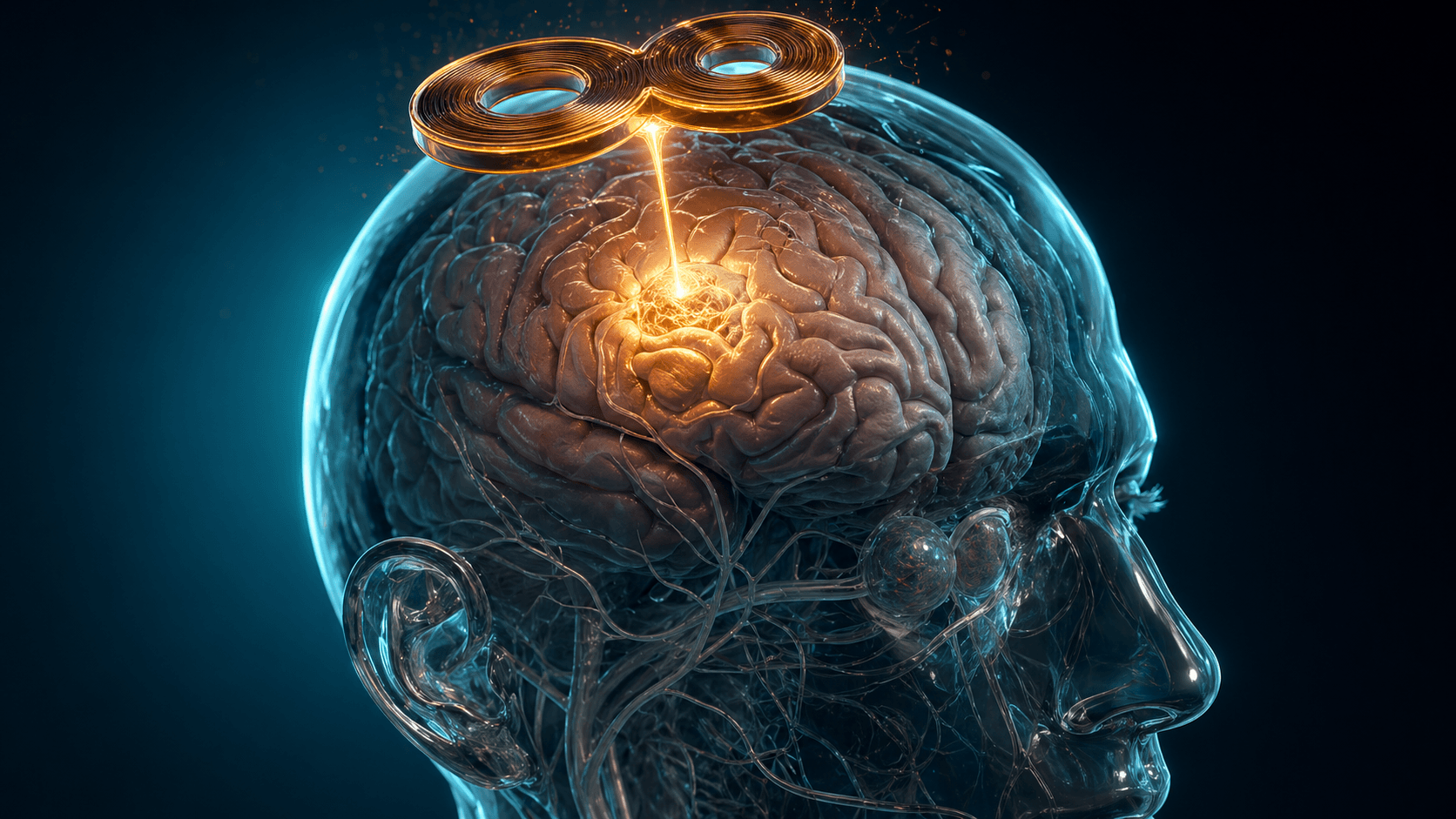
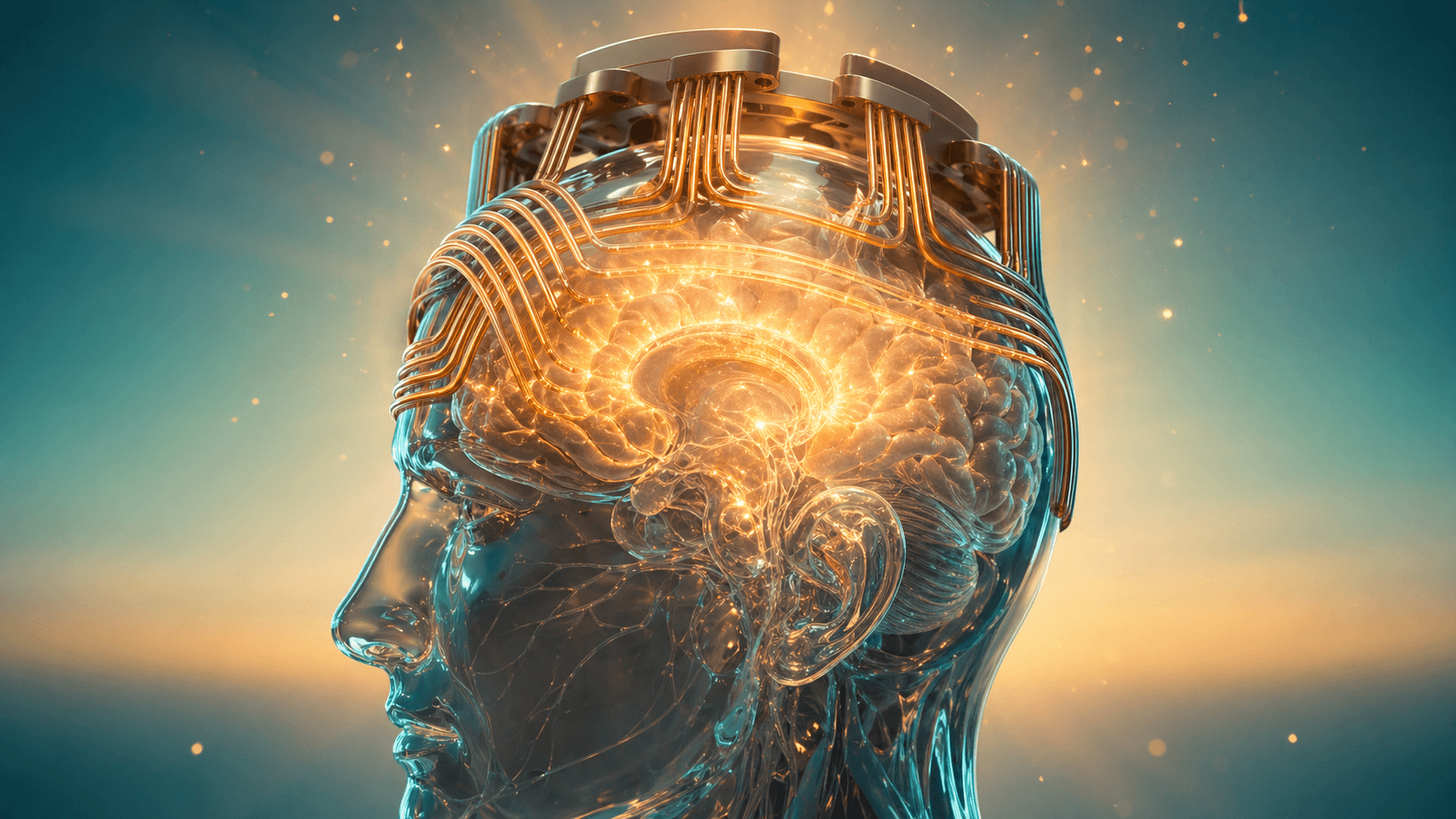
Schematic. The shaded teardrop indicates the approximate volume of cortical tissue stimulated above the >100 V/m threshold per electric-field modeling. The H-coil’s broader, deeper field is the mechanistic basis for BrainsWay’s broader FDA-cleared indication set.
Why does that matter? Two reasons. First, broader coverage means the magnetic pulse is much more likely to engage the right circuits even when individual head shape varies. Second, the H-coil reaches deeper structures — including the medial prefrontal and anterior cingulate networks that the focal figure-8 field cannot.
One device, several specialized coils.
BrainsWay's coils are not interchangeable. Each is designed to engage a specific brain network for a specific FDA-cleared indication.
H1 — depression spectrum
The H1 coil is the depression-focused configuration. It produces a broad bilateral field over the dorsolateral prefrontal cortex and reaches medial prefrontal regions associated with mood. IPMG TMS uses H1 for major depressive disorder, treatment-resistant depression, anxious depression, late-life depression, and (as adjunctive therapy) adolescent depression.
H7 — obsessive-compulsive disorder
The H7 coil is geometrically distinct. It engages the medial prefrontal cortex and anterior cingulate — the cortical entry points to the cortico-striato-thalamo-cortical loop implicated in OCD. IPMG TMS uses H7 for OCD, with brief individualized symptom provocation immediately before each pulse train to engage the relevant circuit.
H4 — addiction
The H4 coil is targeted at bilateral lateral prefrontal cortex and insula — the networks underlying craving and habitual use. It is the coil used for the short-term smoking cessation indication.
What real-world data show.
These figures are drawn from published peer-reviewed studies of BrainsWay Deep TMS specifically. Note that real-world numbers reflect patients who completed full courses and tend to exceed the original RCT figures; we communicate both at consultation.
- 82%Response (real-world MDD)Tendler 2023, n = 1,753
- 65%Remission (real-world MDD)Tendler 2023
- 88%Response (accelerated SWIFT)NCT06357832 · Brain Stim 2026
- 79%Response (ages 60–91)Roth 2024, n = 247
- 66%Response (ages 15–21, adjunctive)Roth 2025, n = 1,120
- < 0.1%Seizure rate (884-patient aggregate)Tendler 2024 · Brain Stimulation
See the full Research & Evidence library for the citation-disciplined version of every claim on this page, with PubMed and journal links and the specific patient populations each figure refers to.
Three reasons.
1. The most extensive FDA-cleared label. BrainsWay holds clearances across the broadest set of indications of any TMS device manufacturer — major depressive disorder, anxious depression, OCD (the first ever), short-term smoking cessation (the first brain-stim addiction clearance), late-life depression, adolescent depression, and the accelerated SWIFT protocol. Several of these clearances have no equivalent on competing devices.
2. Mechanical advantage in deeper, more anatomically variable cases. The H-coil’s broader, deeper field is more tolerant of anatomic variation. This matters most in older adults (whose scalp-to-cortex distance increases with age) and in patients whose head shape would otherwise cause a focal coil to miss its target.
3. Operator commitment. Choosing one device family lets the IPMG TMS clinical team build deep proficiency in motor-threshold mapping, coil placement, and protocol selection. Both H1 and H7 systems are deployed at all 33 IPMG TMS locations — meaning a Riverside patient and a Palm Desert patient receive the same evidence-graded protocol from a credentialed technician under the same medical supervision.
Curious whether Deep TMS is right for you?
A consultation with the IPMG TMS team takes about 30 minutes. We review your history, your prior treatments, what your insurance covers, and which protocol — standard, accelerated SWIFT, or H7 for OCD — would fit your situation.